Sep 5, 2026
Best Commercial Construction Company in Jaipur - Complete Guide
Planning to build a commercial property in Jaipur? Choosing the right construction company is one of the most important decisions you’ll make, and i...

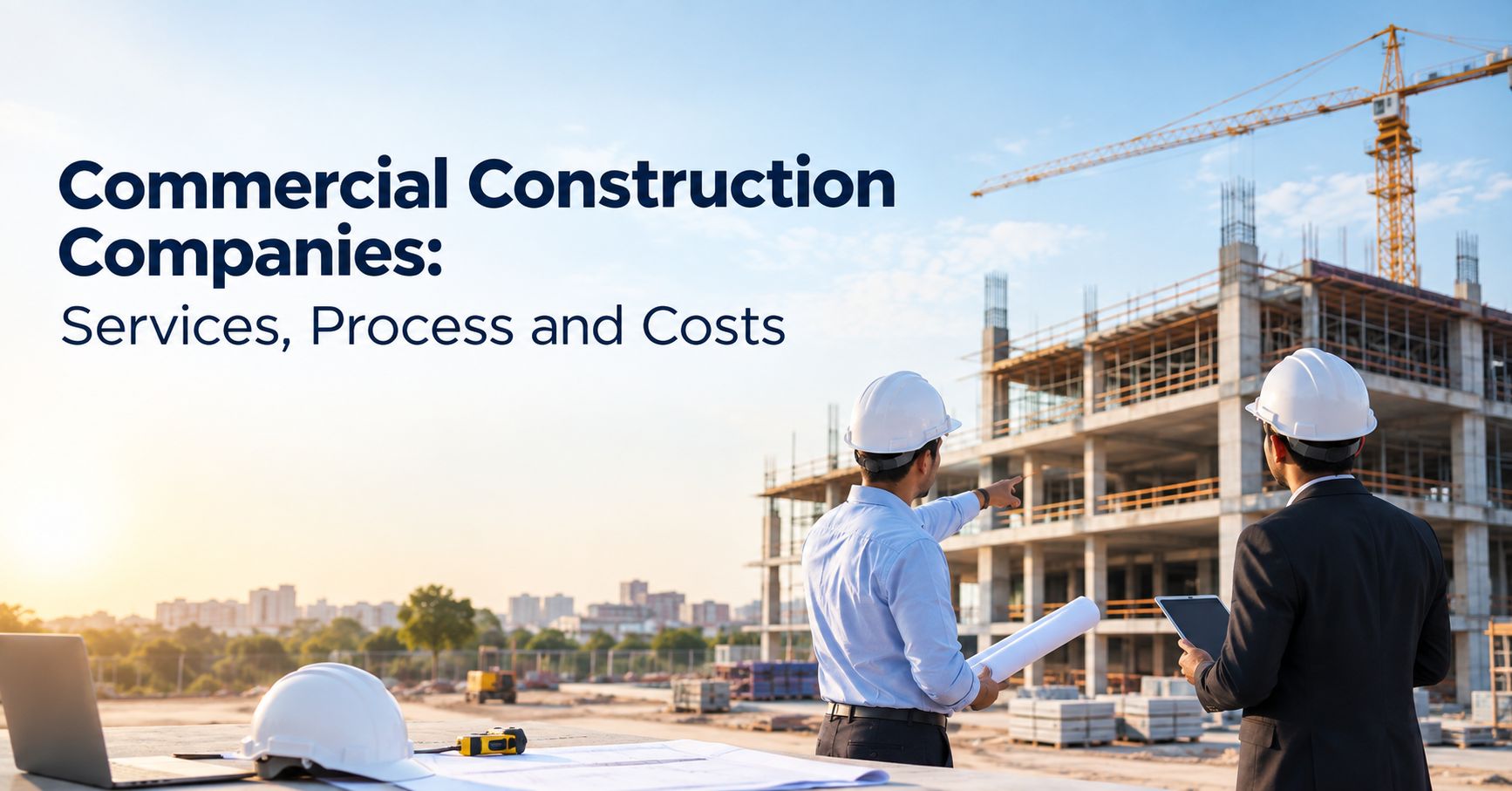
Commercial construction is essential for developing offices, retail stores, hotels, warehouses, hospitals, showrooms, and other business spaces. Commercial construction companies help businesses turn their ideas into safe, functional, and professionally built properties.
From planning and structural work to electrical, plumbing, finishing, and project management, experienced commercial building construction companies can handle different stages of a project. This guide covers their key services, construction process, costs, and the major factors to consider before starting a commercial project in 2026.
Commercial construction companies plan, manage, and execute construction projects for business and institutional purposes. Their services may include architectural coordination, structural construction, electrical and plumbing work, HVAC, fire-safety systems, flooring, painting, interiors, quality control, and project management.
The final construction cost depends on the building type, size, location, materials, design, labour, MEP requirements, finishes, approvals, and site conditions.
Commercial building construction refers to the construction of properties designed primarily for business or institutional use.
Common examples include:
Commercial projects can be more complex than standard residential projects because they often require larger structures, specialised electrical systems, HVAC, fire safety, parking, accessibility, and higher-capacity utilities.
A professional commercial construction company may provide complete construction services from planning to handover.
The process starts with understanding the client's requirements, budget, building size, purpose, timeline, and site conditions.
Proper planning helps reduce unexpected expenses and construction delays.
Construction companies coordinate with architects and engineers for:
The structural design should consider the building's usage, soil conditions, size, and applicable standards.
Commercial buildings require properly planned electrical and plumbing systems.
These may include:
Depending on the project, commercial buildings may require HVAC and specialised fire-safety systems.
These can include:
The exact requirements depend on the building's size, occupancy, type, and applicable regulations.
Finishing services may include:
The quality of finishes can significantly influence both the appearance and construction budget.
Many commercial construction companies also manage labour, materials, subcontractors, timelines, quality inspections, safety, and project documentation.
This gives the client a single point of coordination throughout the construction process.
A typical commercial construction project follows several important stages.
Define the purpose, size, budget, design preferences, and expected completion date.
The site is assessed for dimensions, soil conditions, access, drainage, utilities, and other potential constraints.
Architectural, structural, electrical, plumbing, HVAC, and other necessary designs are coordinated.
A detailed Bill of Quantities (BOQ) can be prepared to estimate materials, labour, and other construction expenses.
Required permissions and approvals should be identified based on the location, building type, size, land use, and applicable regulations.
Major construction activities generally include:
Excavation → Foundation → Structure → Masonry → MEP → Finishing
The exact sequence can vary according to the project.
After construction, quality checks and system testing are completed before the property is handed over to the owner.
There is no fixed commercial construction cost per square foot because every project has different requirements.
Factors such as location, building type, structural design, material quality, labour, HVAC, fire safety, electrical systems, interiors, and site conditions can significantly change the cost.
For initial budgeting, some Indian market estimates place commercial construction broadly around ₹2,500-₹5,500+ per sq. ft., while specialised, premium, or complex projects can cost considerably more.
For an accurate estimate, the project should be calculated using architectural drawings, structural specifications, BOQ, material specifications, and current local contractor rates.
Labour rates, transportation, material availability, regulations, and site accessibility vary by location.
Larger projects require more materials, labour, equipment, and building services.
An office, warehouse, hotel, hospital, and showroom have very different construction and MEP requirements.
Cement, steel, flooring, glass, electrical equipment, sanitary fixtures, and finishing materials can significantly affect the budget.
Basements, multiple floors, large spans, specialised structures, and complex architectural designs can increase construction costs.
Mechanical, electrical, and plumbing systems can represent a significant portion of a commercial project's budget.
Premium flooring, ceilings, lighting, furniture, glass partitions, and interiors can increase the overall project cost.
Choosing the right commercial building construction company is important for maintaining quality, budget, and timelines.
Before hiring a company, check:
Do not select a company only because it offers the lowest quotation. A detailed comparison of scope, materials, quality, timeline, and exclusions is more useful.
Commercial and residential construction have different requirements.
| Commercial Construction | Residential Building Construction |
|---|---|
| Offices, hotels, shops, warehouses | Houses, villas and apartments |
| Usually more complex | Generally simpler |
| Higher MEP requirements | Comparatively simpler services |
| Business-focused design | Lifestyle-focused design |
| May require specialised systems | Mainly residential utilities |
| Often larger project scale | Usually smaller scale |
This is why a company with relevant commercial experience should be preferred for large business projects.
Avoid these common mistakes when starting a commercial construction project:
Proper planning at the beginning can prevent many expensive problems later.
Choosing the right commercial construction company can improve your project’s quality, cost, and timeline. Companies like Jairaj Buildcon and Stone Nest can be considered when comparing construction expertise, services, pricing, and project execution.
Whether it’s an office, showroom, warehouse, or hotel, professional commercial construction services help ensure better planning, quality execution, and long-term value.
Planning to build a commercial property in Jaipur? Choosing the right construction company is one of the most important decisions you’ll make, and i...
Building a house is a major investment, and knowing the expected construction cost before starting work can help you plan your budget properly. A bui...